
Europe - the new forestry investment frontier
By Darius Sarshar
First appeared in Environmental Finance on 26th of January 2022
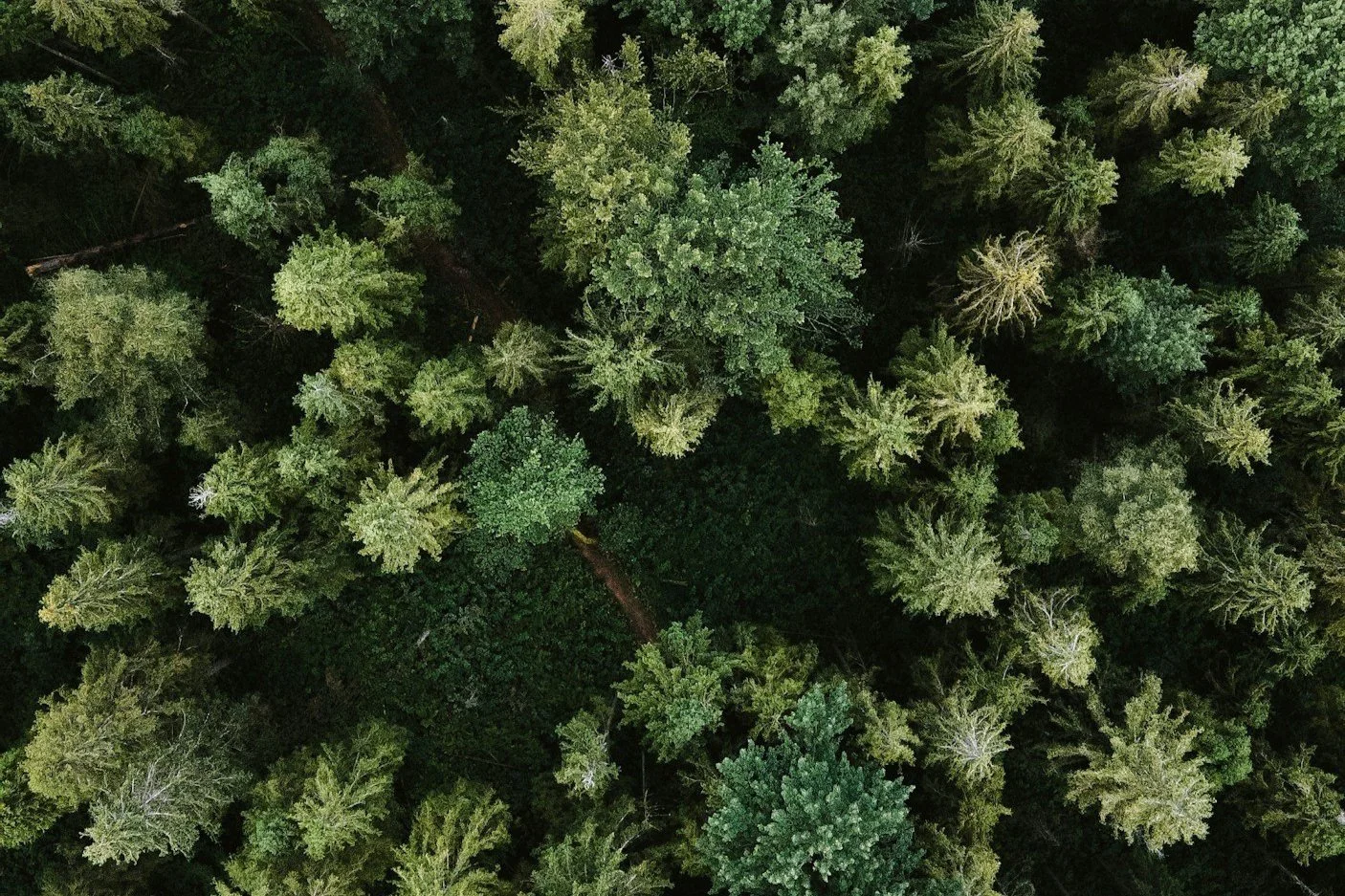
Europe is a global forestry powerhouse. The EU27 is the third largest region in the world behind North America and Asia for production of industrial roundwood, sawn timber, wood panels and paper and paperboard. In 2018 it produced over 18% of global industrial roundwood, 21% of global sawn timber, 15% of global wood panels, and 22% of global paper and paperboard [1]. Europe (excluding Russia) is also the source of almost half of global exports of softwood timber [2]. The sector generates a gross value add of over €165 billion [3] ($187 billion) and employs over 3.5 million people.EU climate goals and GDP growth are driving demand for wood to replace steel and concrete to help decarbonise the construction industry and harvesting and sawmill residues as biomass to replace fossil fuels. And European companies are investing heavily into research and development to develop superior biofuels and biomaterials derived from wood.
European forests have high levels of private ownership, at 60%, and yet Europe accounts for just 1% of institutional ownership of forest assets globally, compared with 69% for the US. Institutional money continues to ignore Europe and flow into the mature timberland investment markets such as the US, Australia & New Zealand, and the UK, driving asset prices to eye-watering levels and depressing investment returns. Why is this?
The answer lies in the structure of the resource base in Europe. Despite having massive forest resources, European forests are highly fragmented, and mostly owned by ageing farmers and non-industrial owners. As these owners age, afforestation rates and woodflows from mature forests are not keeping up with demand. Land is being kept in marginal agricultural production rather than being planted with trees, and timber often languishes in undermanaged forests suppressing growth rates and the rate at which forests can absorb carbon. In parts of the continent, such as northwest Spain and northern Portugal, undermanaged forests become a fire risk, as dead wood and woody shrubs build up on the forest floor. In others, forest ageing is undermining the ability of forests to remove carbon. In Latvia forest ageing is likely to lead to net emissions from the sector over the next decade. [4]
Rural depopulation and a lack of economies of scale mean that the children of those ageing private owners are not interested in retaining the forests their parents own, and private owners increasingly want to sell their marginal agricultural land and undermanaged forests. So who will end up owning Europe's forests? Industry costs of capital are too high to buy land for forestry, and institutional capital flows, the sort of long-term patient capital looking for ownership of forestry assets at scale, have been stifled as the resource base is highly fragmented.
We believe that it is up to specialist forest investment managers to help channel capital into the aggregation of small properties into institutional scale forestry portfolios across Europe. This could open up a large new frontier for the timberland investment industry and see tens of billions of euros of institutional capital invested in revitalising European forests over the next few decades.
SLM currently manages an Irish forestry fund backed by a number of large institutional investors doing just this, and as that fund reaches full deployment, we are now looking to scale up our investments by raising capital for a new European fund to invest in forestry and permanent crops in a number of European countries. On the forestry side, we will combine active management of existing forests to boost wood mobilisation, and afforestation to sequester carbon and expand the resource base to meet future demand for wood products and energy. The result will be a carbon negative forestry portfolio. On the permanent crop side, we will focus on regenerative agriculture.
Where site conditions allow, as we have done in our forestry investments in Ireland, we will abandon clearfelling and adopt Continuous Cover Forestry (CCF) instead. Done well, CCF can be more profitable than clearfelling by producing more, higher-value wood, stronger early cash flows from thinning, whilst also keeping harvesting costs low, and reducing or eliminating replanting costs altogether.
CCF forests can sequester more carbon than conventionally-managed forests as permanent forest cover is maintained, soil carbon stores can accumulate without the periodic mass disturbance clearfell events, and as more carbon is locked up in long-lived higher value construction timber. Crucially, it is widely recognised that CCF can also help with climate change adaptation by building forest resilience to fires, storm damage and pest and diseases.
Conventional forest management based on clearfelling was designed over 100 years ago to maximise volume production and minimise costs across industrial-scale state forests, often run like military operations. But times have changed and there are many more demands and pressures on forest managers today. As investment managers we are looking for forest management to maximise return on investment, maximise resilience to climate change, and optimise wood production and the provision of ecosystem services including carbon sequestration.
Across Europe, some state forests adopted CCF decades ago, but others are still stuck in the past. But CCF uptake by non-industrial owners in those countries is happening more quickly as owners seek to keep their forests standing whilst still producing income from harvesting wood. We need to accelerate that and build a brighter future for European forestry.
[1] Forestry Statistics 2020 (International Forestry). Forest Research
[2] Global Lumber Markets June 2021 (Wood Markets International)
[3] EU Agriculture, forestry and fisheries statistics 2020 Edition
[4] Latvia National Forestry Accounting Plan 2021-2025