
Agriculture has an investment problem - Not of Capital, but of Language
By Joao Roseiro
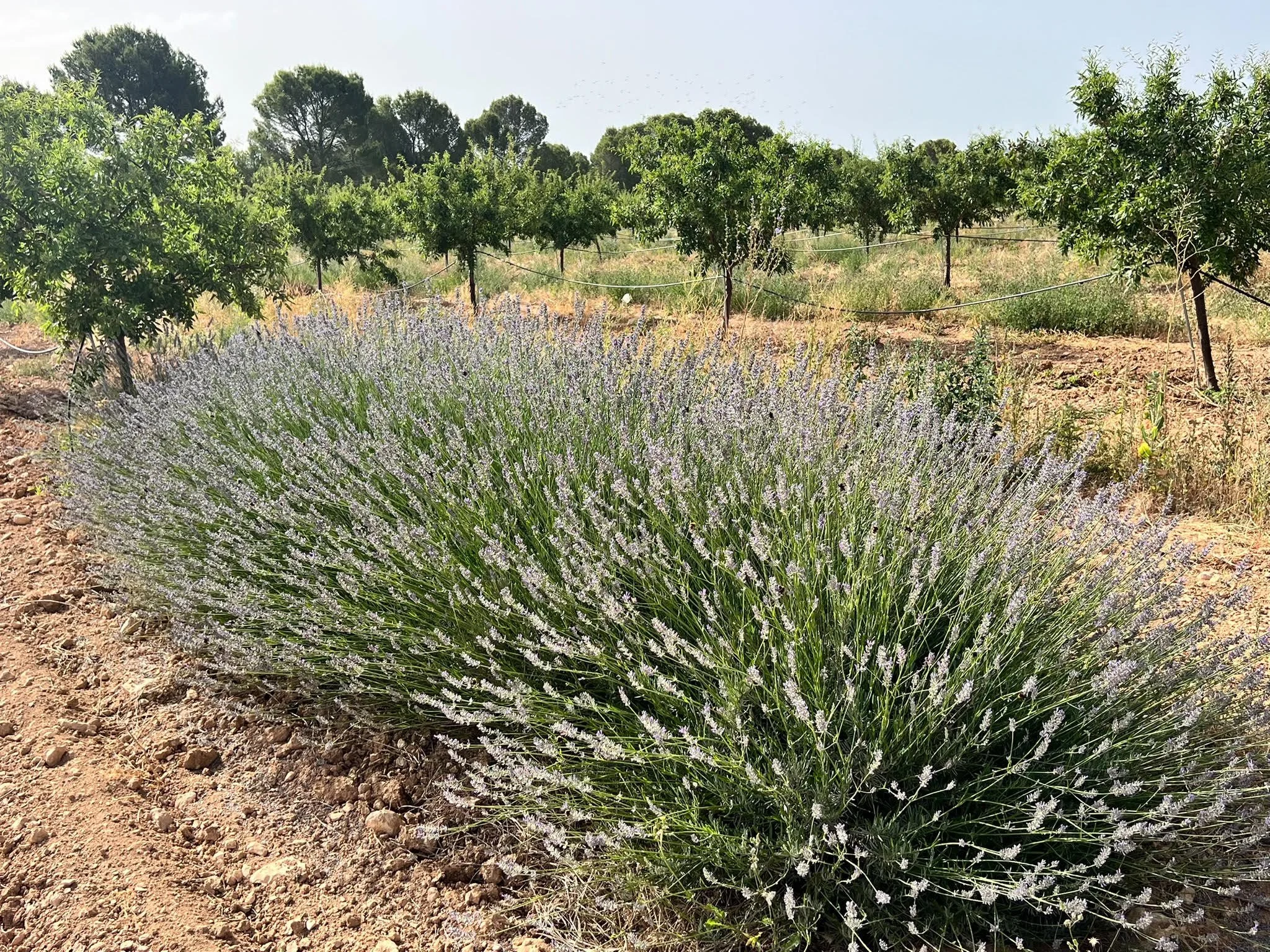
Lavender at an almond orchard, Murcia, Spain.
Institutional capital is available. What agriculture often lacks is a financial language capable of deploying it with confidence
Institutional investors, like pension funds, sovereign wealth funds and insurers, are actively searching for real assets that can deliver long-term, inflation-protected returns. Farmland should be a natural fit. It is tangible, finite, and fundamentally linked to human survival. And yet, capital allocation into agriculture remains constrained, particularly in Europe.
The reason is simple: investors cannot price what they cannot understand.
I say this not as a financial theorist or expert, but as an agronomist who has spent the past 5 years working within an investment platform, specialized in farmland investments. I have been pushed, in many ways, to learn how to speak both languages: on one side, the biological reality of farming systems and on the other, the frameworks through which institutional capital evaluates risk and return. The gap between the two is wider than it appears, and it is costly.
Agriculture operates in a language that institutional capital most of the times does not speak. Yield variability, soil health, biological cycles, water stress. These are not peripheral variables, rather they are the core drivers of risk and return. These variables are not ignored in financial models, but they are simplified too much. Complex biological systems are reduced to average numbers and linear assumptions, which end up hiding the real nature of risk, especially on the downside.
Consider a simplified Iberian almond system. It is common to observe yields ranging from below 500 kg per hectare in stress years to above 2,000 kg in favourable conditions. This is not an outlier scenario, it reflects observed variability across farms and seasons in Southern Europe. Yet, in many investment models, these assets are still underwritten using a single “normalized” yield (lately, in the range of 1,500 to 1,800 kg per hectare) with limited explicit treatment of downside frequency or severity.
From this, two issues arise immediately.
i) First, the average masks the distribution. A system that alternates between 500 and 2,000 kg/ha does not behave the same way as one that consistently delivers 1,250 kg/ha, even if the average is identical. The timing and depth of downside years materially affect cash flow stability, debt service capacity, and reinvestment ability.
ii) Second, resilience is invisible. If agronomic practices, such as improved soil structure or water management, shift the lower bound of production from 500 kg/ha to 800 - 1,000 kg/ha, the average yield may change only marginally. But the risk profile of the asset changes significantly, particularly in its ability to withstand stress years.
In my experience, many investment models do not explicitly capture either effect. As a result, assets with fundamentally different risk characteristics are often treated as equivalent.
This is not just a modelling flaw. It is a capital allocation problem.
Today, capital is systematically overpaying for stability that does not exist, while undervaluing resilience that is not measured.
The problem becomes even more acute when sustainability enters the equation.
Regenerative agriculture, the core foundation of the work I've done in this past 5 years, is increasingly positioned as a response to climate volatility. Practices such as increasing soil organic matter, improving water retention, and reducing input dependency are intended to improve the resilience of farming systems over time. In agronomic terms, this is well understood. But investors do not allocate capital based on soil structure. They allocate capital based on risk-adjusted return. And today, I still struggle to find a way to translate one into the other.
This raises a broader question. If regenerative management primarily changes the downside characteristics of farming systems rather than simply increasing average returns, should we still evaluate these assets using conventional risk-adjusted return metrics alone?
Despite progress from initiatives such as the Task Force on Nature-related Financial Disclosures, most sustainability frameworks still focus on disclosure rather than valuation. They describe practices, but they do not quantify how those practices reshape the financial risk profile of an asset. Sustainability, in other words, is being reported… but not priced.
My intuition is that we probably need a new generation of investment metrics capable of capturing resilience, not simply volatility. Metrics that recognise how biological systems respond under stress, how management changes the probability of severe losses, and how degradation or regeneration alter the long-term distribution of returns.
I don't think the industry is there yet. Neither am I. But I increasingly believe this is one of the most important pieces of work still missing if regenerative agriculture is to become a mature institutional asset class. And, over time, it has become something of a personal quest...
In practice, most investment committees are not rejecting agricultural opportunities because the returns are unattractive. They are rejecting them because the risk cannot be articulated in a way that is comparable, defensible, and internally auditable, with real consequences and sector benchmarks.
Insurers continue to price agricultural risk based on historical averages that no longer reflect climate reality. Banks constrain lending because uncertainty cannot be formalised. Capital flows towards asset classes that are easier to model, even when they are structurally less resilient.
Even a modest reallocation of global institutional portfolios toward farmland would represent hundreds of billions in capital. But that capital will not move on narrative alone. It will move when risk can be priced, compared, and justified within existing financial frameworks.
Whoever builds that translation layer will not simply create a better metric. They will redefine how agriculture is understood as an asset class.
Until then, agriculture will remain stuck in a paradox: widely recognised as essential, structurally attractive, and persistently mispriced.